Question
How do you carry one creative idea across models and formats?
Work
Creative Studio product design and prototyping, filmmaking experiments and a broader creative-orchestration specification.
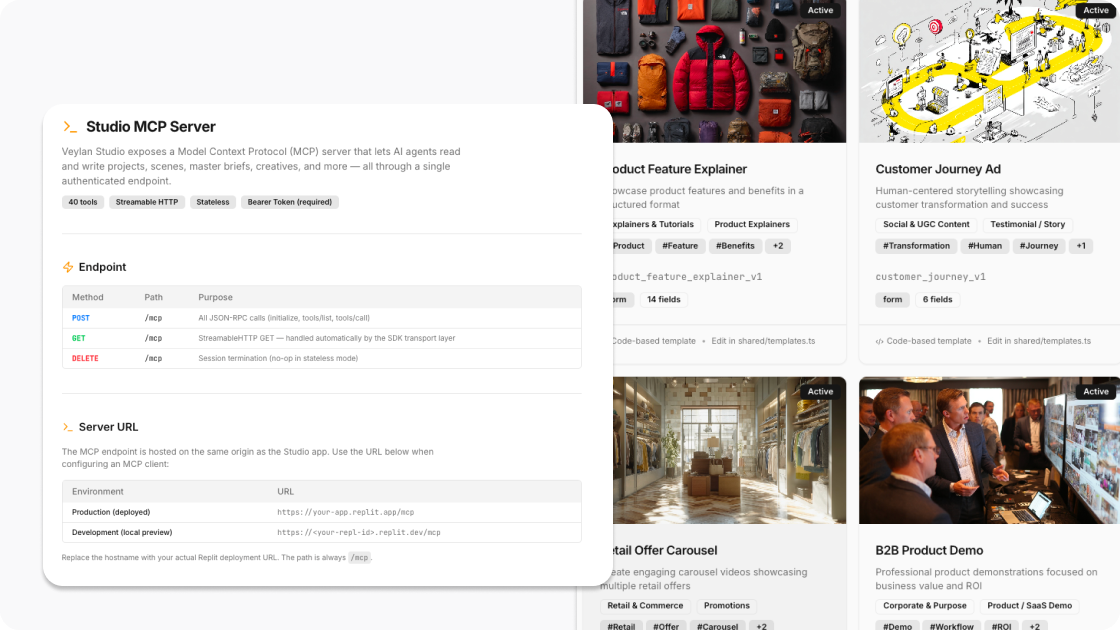
I started this exploration by making films with AI. The video models I was using produced clips of around eight seconds. Making a longer piece meant finding a way to carry the story and creative direction from one generation to the next.
A clip could look convincing on its own and still feel wrong in the film. A character might change, the visual treatment might drift or a shot might interrupt the pacing.
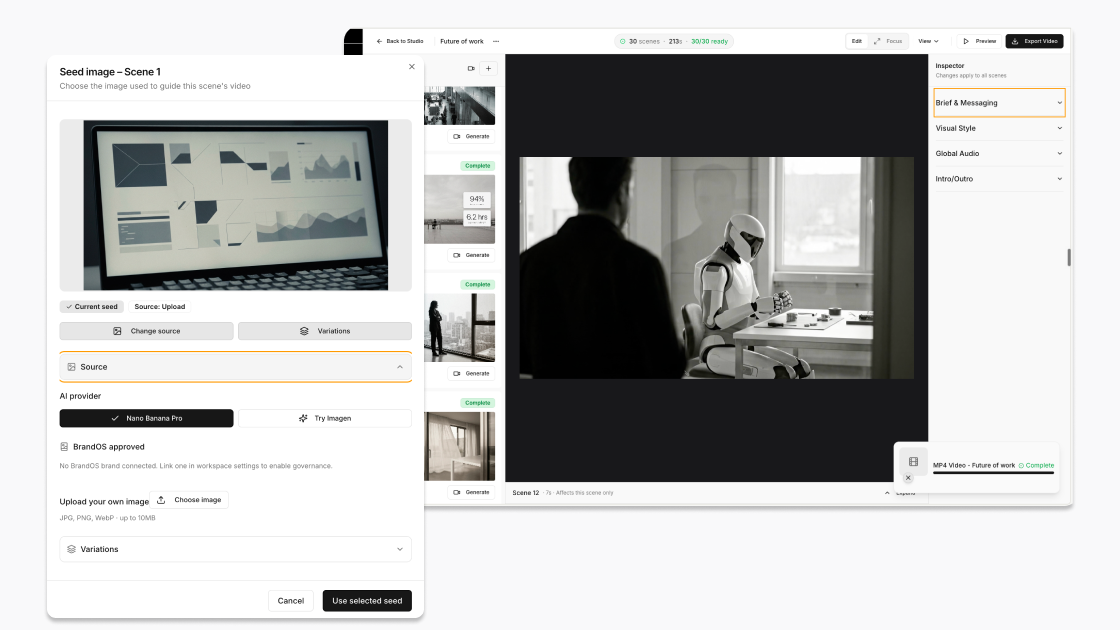
I designed and built Creative Studio to make that process easier to direct, from the initial brief and storyboard to reviewing scenes and assembling the selected work.
Give each scene a purpose
The storyboard became the production plan. It established what each scene needed to accomplish, what the audience should understand and what needed to remain recognizable between shots.
Those choices shaped the instructions given to the models. A reference image could establish a character, setting or composition. A video model could then develop that image through movement.
The prototype brings briefs, storyboards and scenes into one workspace. The relationship between the overall idea and each contribution becomes something a person can work with throughout production.
Make revision part of the experience
A weak shot should be something I can improve while preserving the work around it.
In Creative Studio, I can return to a scene, revise its direction and generate alternatives. That gives experimentation a manageable scope. I can focus on what needs to change, then consider the replacement in relation to the rest of the film.
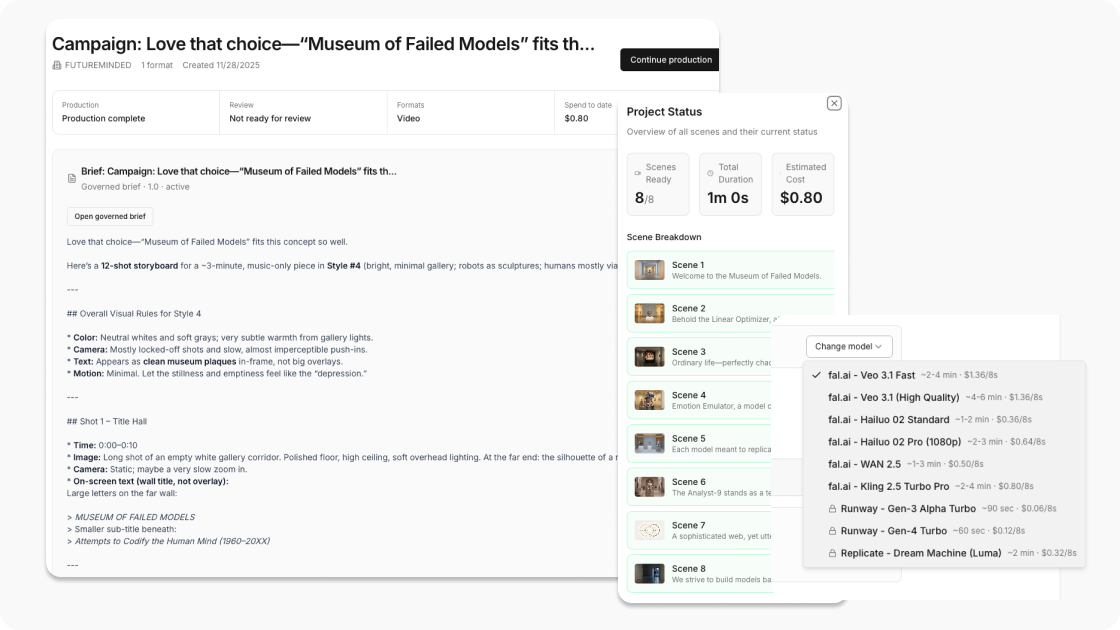
Previews provide another decision point. They let me assess an interpretation before committing to more expensive generation.
I designed around those moments of comparison and refinement. Keeping the surrounding work available helps someone continue developing an idea without rebuilding the process each time.
Make model choices serve the work
Different models contribute different capabilities. The creative direction needs to remain understandable as work moves between them.
The prototype translates scene direction into model instructions and supports choosing how individual contributions are produced. References and instructions give each generation context for its part of the story.
The person directing the film still decides whether an image expresses the idea, which variation belongs and where the sequence needs to change. The interface supports those decisions by keeping the instructions, outputs and revisions connected.
Explore how the idea carries into other formats
The filmmaking experiments informed a broader specification for directing work across a campaign.
A film develops an idea over time. A carousel reveals it card by card. A display ad communicates within a single frame. Each needs its own treatment while retaining the campaign’s message and character.
That broader system remains a direction for development. The working film prototype provides a place to test how shared direction, review and revision could support more models and formats.