
Question
How do you keep strategy connected to a changing market?
Work
Agentic research, semantic classification, competitive analysis, positioning and evidence-backed content strategy.
A capability that made your product distinctive may now appear in several competitors’ announcements. You need to understand whether the difference is closing and what that means for your own story.
I built an always-on research system for Veylan focused on AI in marketing and advertising. It helps us follow the market, examine what is changing and carry that understanding into positioning and content.
Build understanding that accumulates
The system follows selected competitors alongside broader developments in how AI is being used across marketing and advertising.
Specialized agents collect articles, extract the relevant information and develop research briefs. The material is organized around the capabilities and activities it describes, so companies using different language can still be compared on a common basis.
That structure makes the collection useful over time. We can return with a new question, examine earlier assumptions and follow how a theme or competitive position has developed.
Make change easier to examine
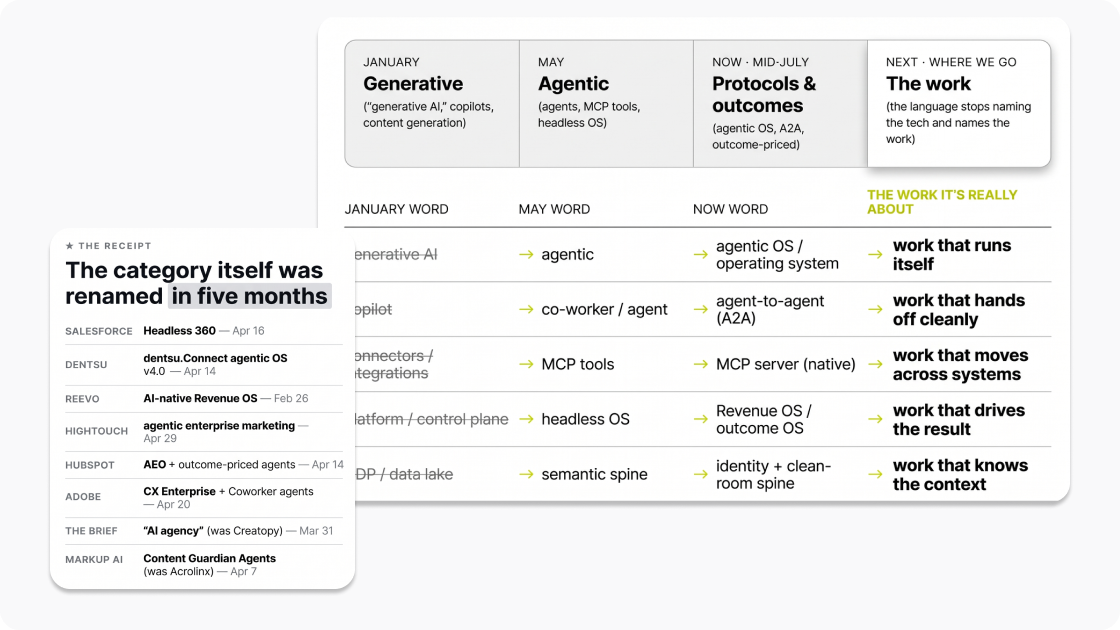
The language of the market became one revealing example. I watched companies move from talking about “copilots” to “agents.” That raised a question: had the capability changed, or had the way it was being presented changed?
A growing research record gives us a way to investigate. We can look across announcements, compare the capabilities described and see whether a pattern appears across distinct sources.
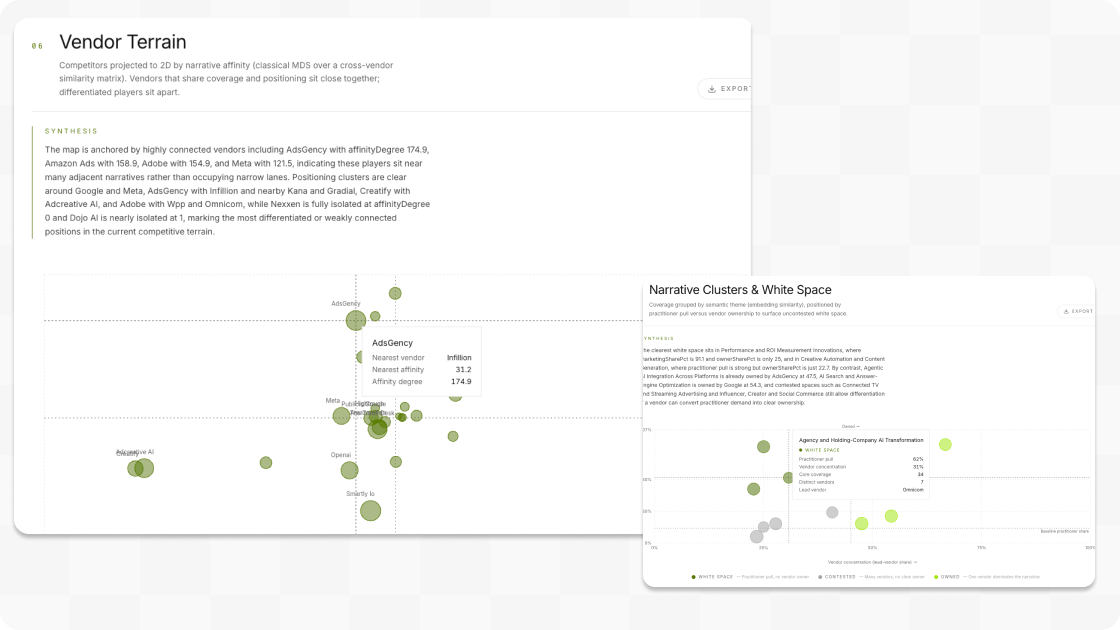
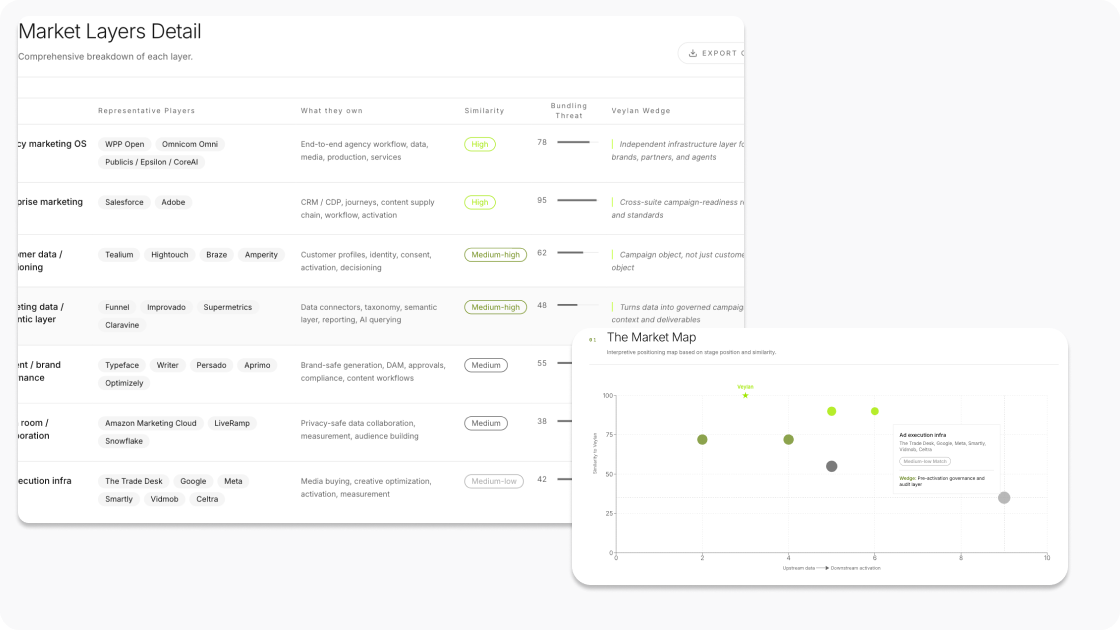
Two live views help people explore the work. Industry Signal shows patterns in the collected coverage. Competitive Analysis examines what those patterns mean for Veylan’s position.
The design brings the research into a form where someone can see a development, examine its significance and decide whether it deserves a closer look.
Carry the analysis into positioning
This is the most important connection in the system: bringing what we learn into how we explain the business.
A positioning agent combines the research with Veylan’s product definition, audiences, capability comparisons and existing messaging. It develops recommendations about what we should say, to whom and why.
Those recommendations give us something specific to question. Does a capability still distinguish us? Are other companies making the same promise? Can we support the difference we want to claim?
A content strategy agent uses that context to develop topics and narratives. Research can then inform the next article, sales conversation or positioning revision, with the team assessing whether the recommendations reflect what the product can deliver.
Make the reasoning possible to inspect
I designed the system to preserve the connections between its interpretations and their sources.
Capability claims retain supporting evidence. Market summaries point back to their research briefs. Content directions retain the research and positioning version that informed them.
Someone reviewing a recommendation can follow those references, question the interpretation and revisit it when new information appears. Calculations and clustering provide the basis for AI-written explanations.
Those connections also help keep the conclusions proportionate to the evidence. Coverage can show what the market is discussing. It does not, by itself, establish adoption, revenue or competitive strength.
The result is a research process that supports an evolving point of view, with a way to examine why we hold it.