Question
How do you design a marketing operation that people and agents can run together?
Work
An agentic demand-generation system and a reusable marketing-site product.
Marketing keeps moving. Research suggests a topic, an article gives a campaign something to say and a customer’s response raises the next question.
Keeping those activities connected takes work. Someone has to carry the thinking forward, decide what is ready and make sure the next task has what it needs.
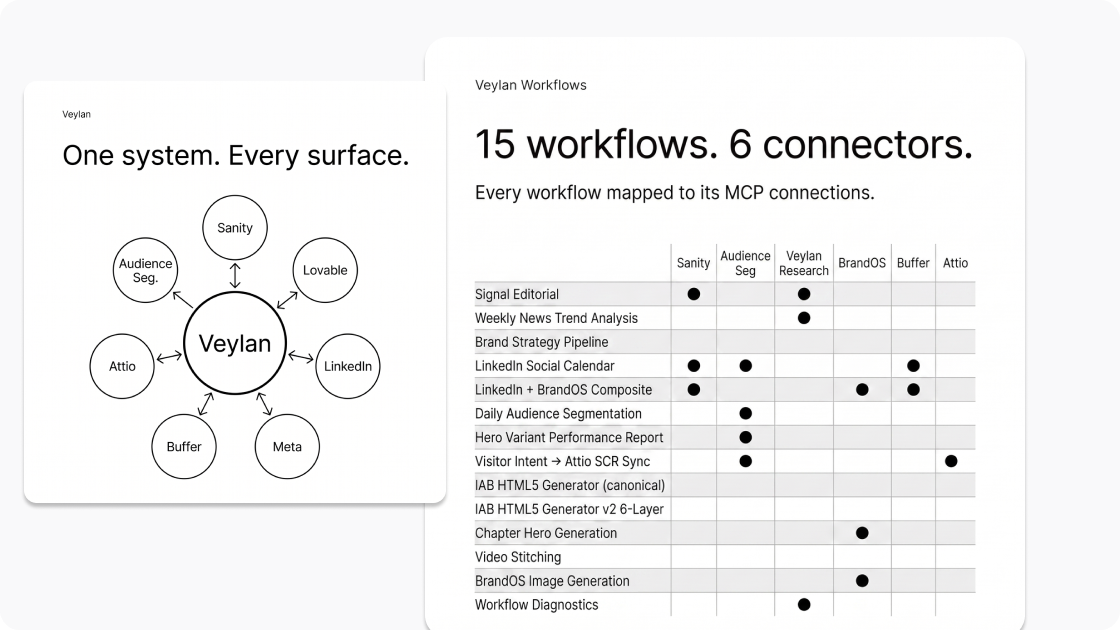
I designed and built a demand-generation system to explore how people and agents can share that work across research, content, campaigns and sales follow-up.
Carry an idea into the next task
One workflow starts by looking at audience behavior, research and the existing content library. It identifies topics worth addressing and gives an editor recommendations to review or reprioritize.
A chosen topic becomes a brief. The editorial workflow uses research and approved messaging to develop a draft for review. Published content can then become the source for social posts adapted to different audiences.
The design challenge is what travels between those steps. The next person or agent needs to understand the audience, the evidence and the purpose of the work. Keeping those connections available gives each contribution a starting point.
Make the next decision clear
A draft awaiting review, a post ready to publish and a campaign ready to activate are different states. I designed the workflows around those distinctions.
Content is staged for people to review and publish. Paid-media targeting is prepared for a later decision about activation and spending.
Some internal actions can proceed under defined rules. A qualified demo request, for example, can trigger an update to a company record and create a follow-up task. That workflow reports what succeeded and what failed.
This makes delegation more specific. People need to know what an agent can do, what it has done and which decision is now theirs.
Let the website contribute to the work
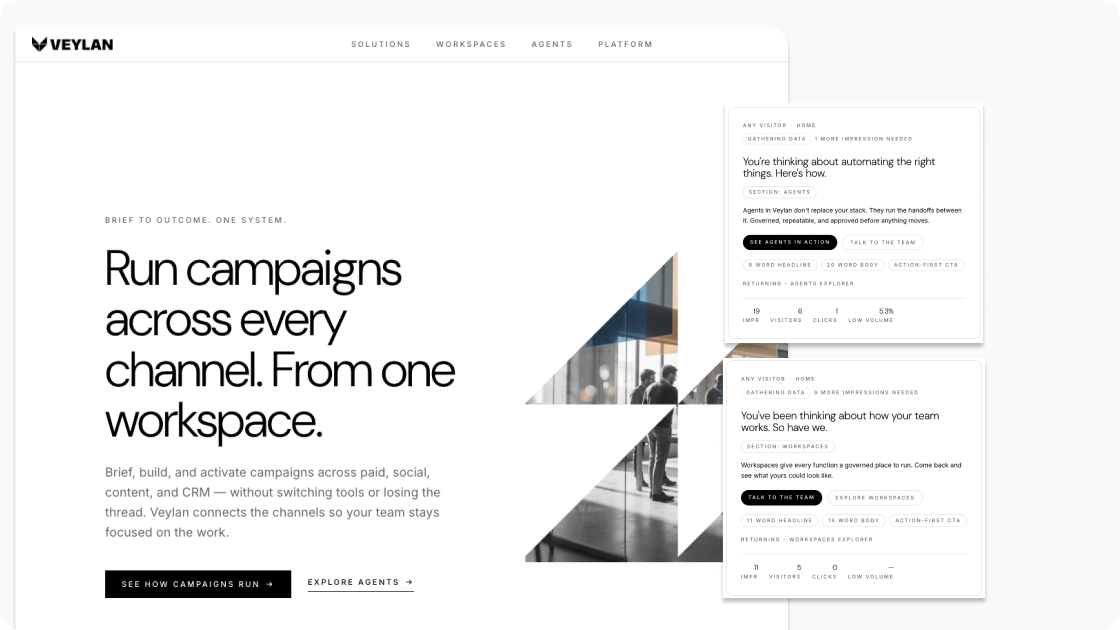
Alongside the workflows, I built a reusable marketing-site product, with Veylan as its first application.
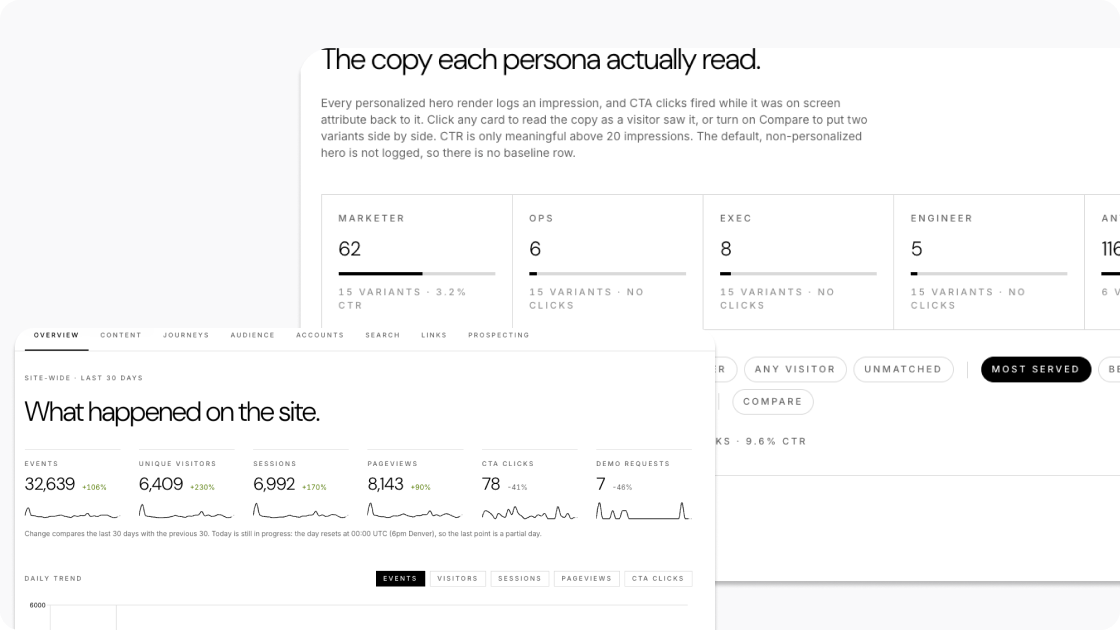
Editors create copy variations for different audiences. The site uses information visitors provide, campaign context and browsing behavior to select among those versions. Inferred audience profiles carry a confidence level.
Editors retain control of the language. The site records which version appeared and which call to action the visitor clicked.
That gives the team something concrete to examine: how particular messages were presented and how visitors responded. People and agents can use the same reporting to inform the next content or campaign decision.
Learn whether the operation is improving
The system also records workflow activity, including run counts, duration and deliverables. These help identify where further development may be worthwhile.
The larger test is whether the operation becomes more useful over repeated cycles. Do recommendations lead to worthwhile work? Does context survive the handoffs? How much correction and review does the team need?
Commercial impact still needs to be established by connecting that work to qualified demand, sales opportunities and revenue over time.