Question
How do you build the foundation for an agentic business?
Work
Collaborative enterprise product design across technical architecture, agent orchestration, governance and experiences for people and agents.
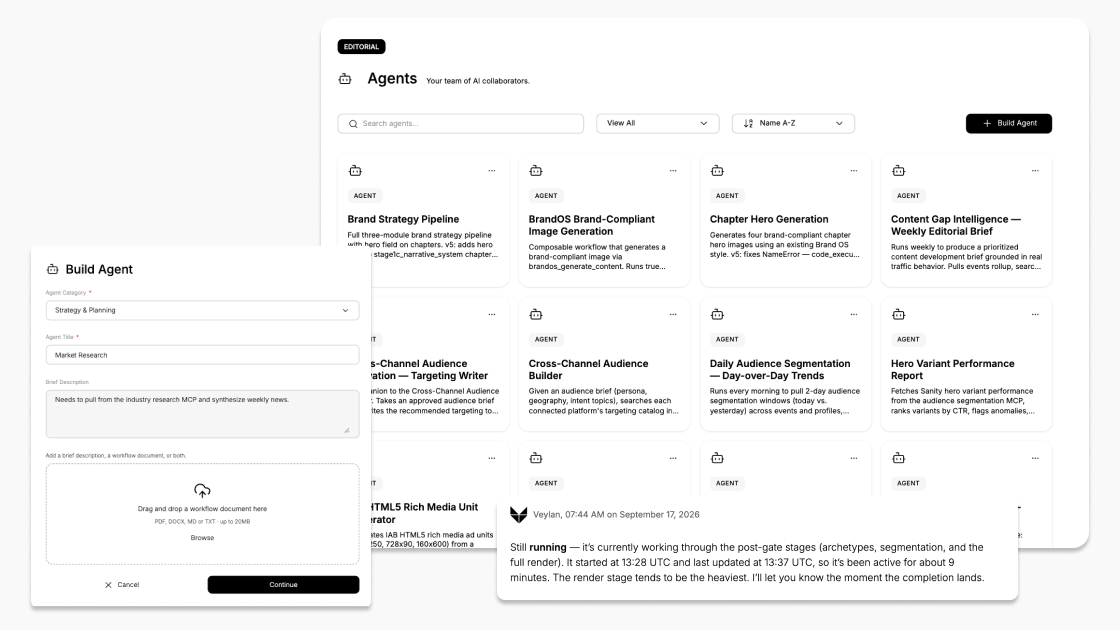
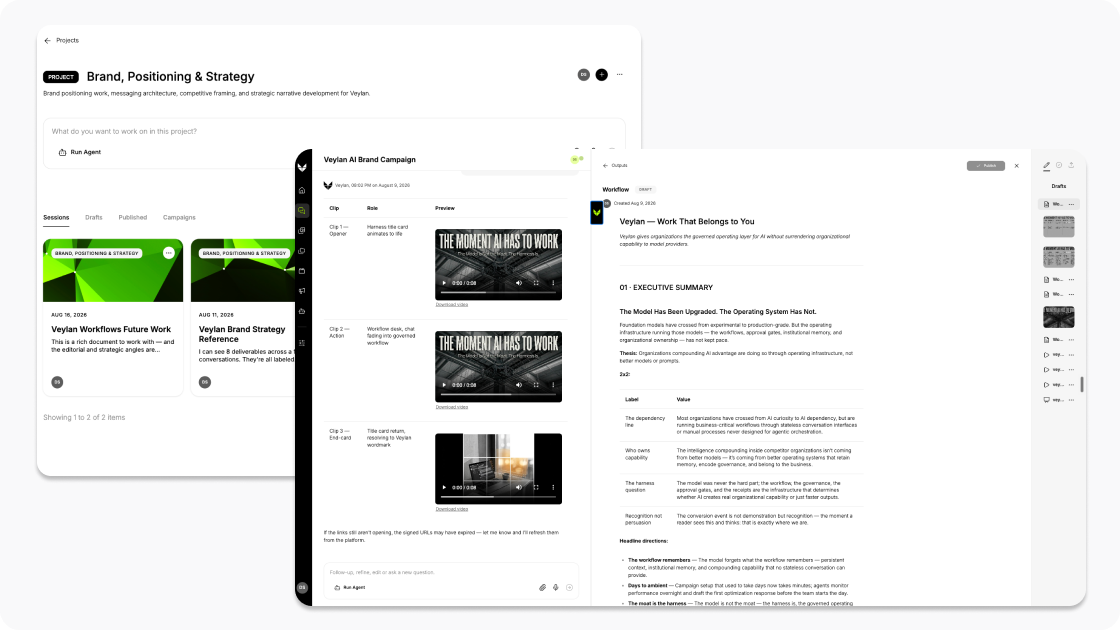
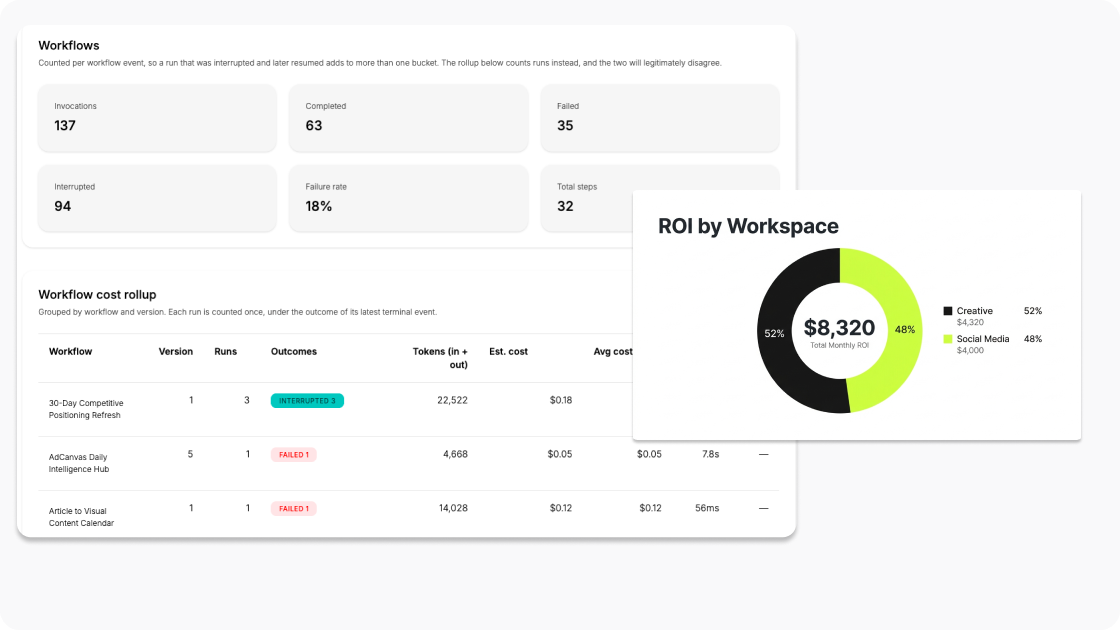
When someone delegates work to an agent, they need to know what it will use, what it can do and when they’ll be asked to make a decision.
Inside a business, that work also has to fit existing systems, responsibilities and ways of operating. Those connections shape whether an agent becomes useful in someone’s working day.
As Co-Founder and Chief Product Officer of Veylan, I’m working with our team to build the infrastructure and experiences that make this possible, starting with marketing and advertising.
Start with the work someone needs to do
Working with agents introduces a different set of design questions from having a conversation with AI. Someone needs to define a task, give it the right context, review what comes back and continue the work.
The product experience needs to make those activities understandable. What is running? What needs my input? Where did this result come from? What can I do next?
These questions guide the design system. A person starting with a business goal needs help expressing it in a form an agent can act on. An experienced operator needs access to the detail required to direct and refine the work.
Give agents context they can use
Every business brings its own information, systems and operating rules. Connecting them to an agent requires decisions about what the information means and when it applies.
For an agent helping develop a campaign, that might include the audience, approved product claims and the purpose of the brief. Access to those materials is a starting point. The design also has to establish which guidance applies to the task and what actions are permitted.
Our technical and product work connects business context to models, tools and workflows. Accommodating different enterprise environments within that shared foundation is a central challenge.
Design both sides of the handoff
People and agents need different ways to participate in the same work.
People need an experience through which they can express intent, inspect results and make decisions. Agents need structured instructions, relevant context and clear boundaries for action.
I think of these as connected sides of the product. A decision someone makes in the interface needs to have an explicit meaning for the agent. What the agent produces needs to return in a form a person can understand and act on.
Traceability, permissions and approval points belong in that design from the beginning. They establish who can do what, where responsibility sits and how a consequential decision can be examined.
Keep building as the patterns change
We’ve been developing Veylan while the technical architecture and interaction patterns for agents are still taking shape.
The ways we coordinate models, tools and workflows influence what the experience can offer. In turn, trying to make that experience clear reveals requirements for the technology beneath it.
The ongoing research explored elsewhere in this collection supports that process. It helps us examine changes in the market and reconsider the decisions we’re making.
This is a shared effort across engineering, product and experience design. My focus is helping those disciplines develop a coherent product that people can understand and use as its capabilities grow.