

Question
How do you scale brand and creative systems in an agentic world?
Work
Brand grammar, creative direction, AI evaluation and human review.
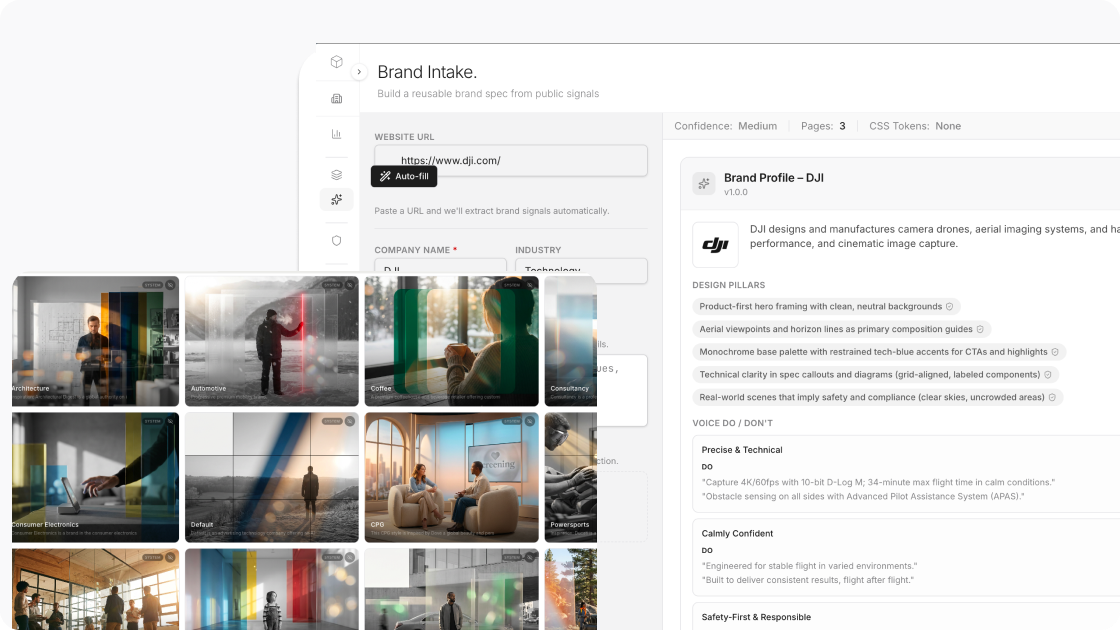
As more people and AI tools create for a brand, keeping the work recognizably yours becomes a design challenge. Guidelines need to influence the choices being made while the work is taking shape.
I designed BrandOS to explore how that could happen. It brings brand direction into the process of creating and reviewing work, helping teams explore variations, understand where they fall short and decide what deserves to move forward.
Turn brand principles into creative direction
A creative director can recognize when something feels wrong for a brand. The camera moved too quickly. The language pushed too hard. The image looked polished but lost its human quality.
That understanding is part of the brand. I wanted to explore how more of it could become useful to the people and agents making the work.
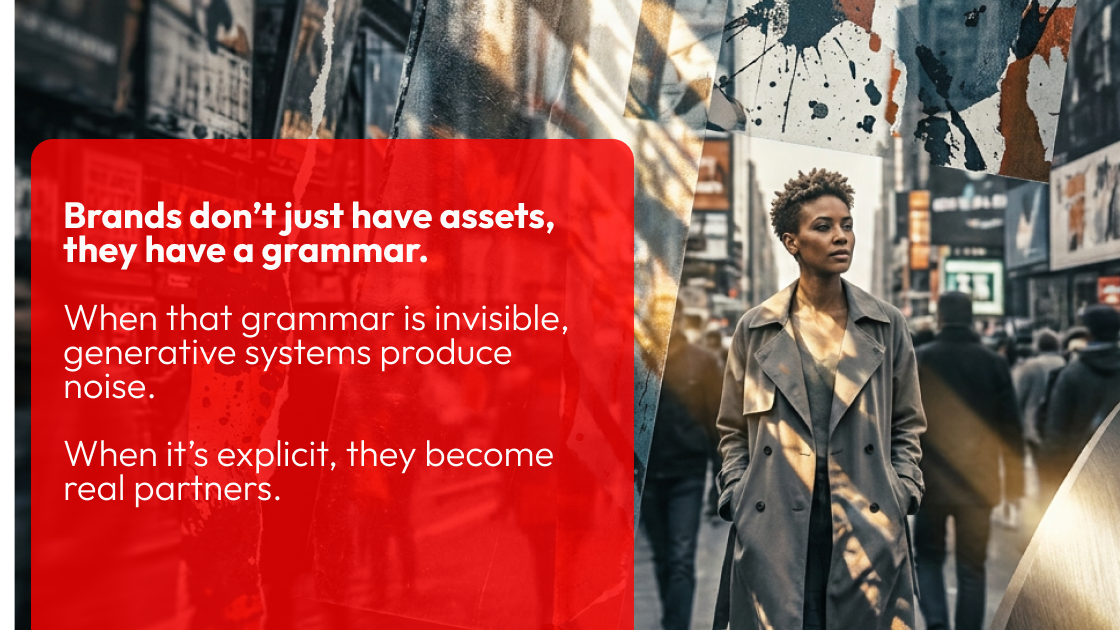
I call that pattern of choices brand grammar. A principle such as “human at the center” should influence how a person is framed and what the story pays attention to. A restrained voice should shape the language, pacing and delivery.
The design connects each principle to creative instructions and something a reviewer can examine in the result. That gives the team a clearer way to explain what it is looking for while leaving room for interpretation.
Help the same character carry across formats
I developed a reference style system spanning image, video, copy and voice.
The challenge was to preserve a recognizable character as the form changed. An image might express determination through framing, light and the visibility of effort. A video could carry that idea through movement and rhythm. Copy and voice could express it through language and delivery.
Templates make those choices easier to work with. They give each format a starting structure while carrying the brand’s principles into the creative direction.
Make review useful for the next decision
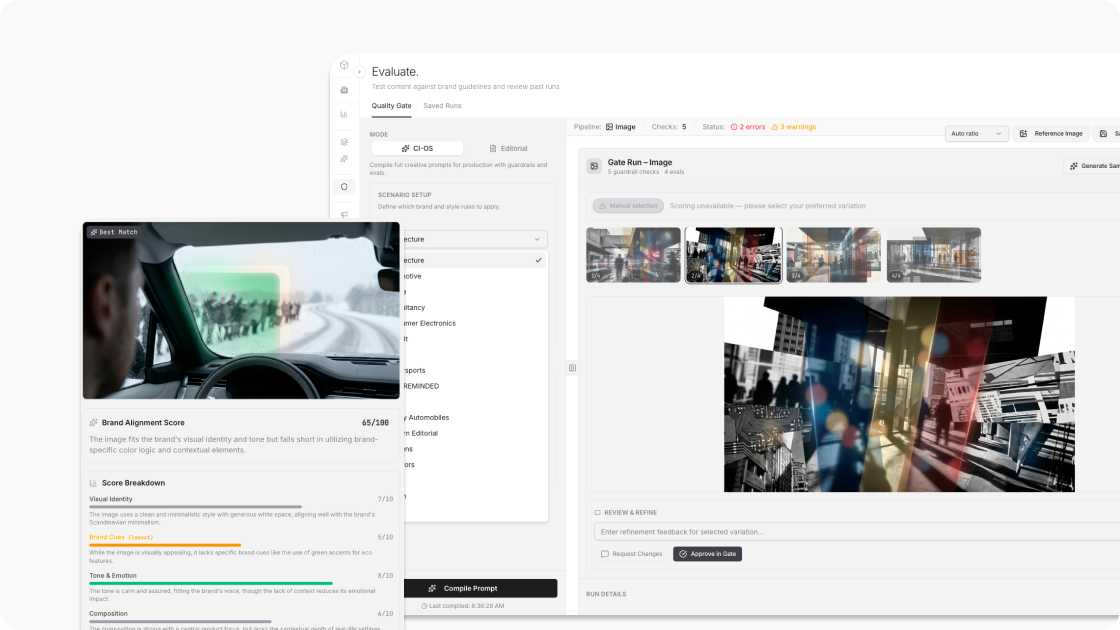
In Evaluate, a person can compare creative variations alongside an AI reviewer’s findings.
The reviewer considers visual identity, brand cues, tone and emotion, and composition. It explains its assessment, identifies rule failures and suggests revisions. It can recommend an option that meets the requirements. A high style score does not override a failed required rule.
I designed the review around giving people something specific to inspect and act on. The person responsible for approval makes the final decision.
The basis of the assessment matters too. Reviewing an image’s prompt cannot establish what appears in its pixels. People need to understand what was examined and where the assessment is limited.
Keep the thinking available as the work continues
Saved runs can retain the brief, instructions, creative versions, evaluation findings and approval status. Someone returning to a session can see what was requested, compare alternatives and continue refining the work.
BrandOS also lets external agents retrieve the brand specification through MCP. The central record can support work happening in other tools.
The next design direction is to make intake more deliberate: connect source material and examples to proposed guidance, then let a brand owner review and approve it. That fuller intake model remains a proposed extension of the exploration.
The aim is to help more people and agents work with a brand’s creative direction, while giving the team a practical way to develop and maintain its standards.