Question
What could a team become when agents create new capacity?
Work
Labor modeling, workflow compression, capacity allocation and future-role exploration.
I’ve spent much of my career building teams: bringing together the right expertise and giving people the structure to do good work.
Building with agents has made me revisit that structure. When part of the work takes less time, responsibilities can change. A person might spend more time reviewing, work might pass through fewer hands and the team might have room to take on something new.
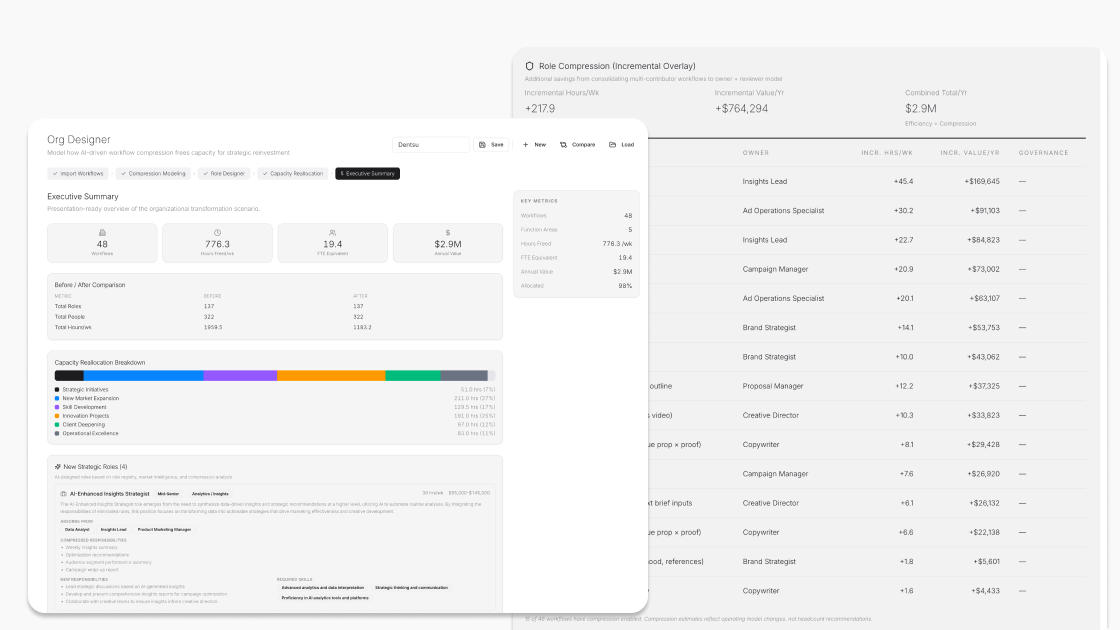
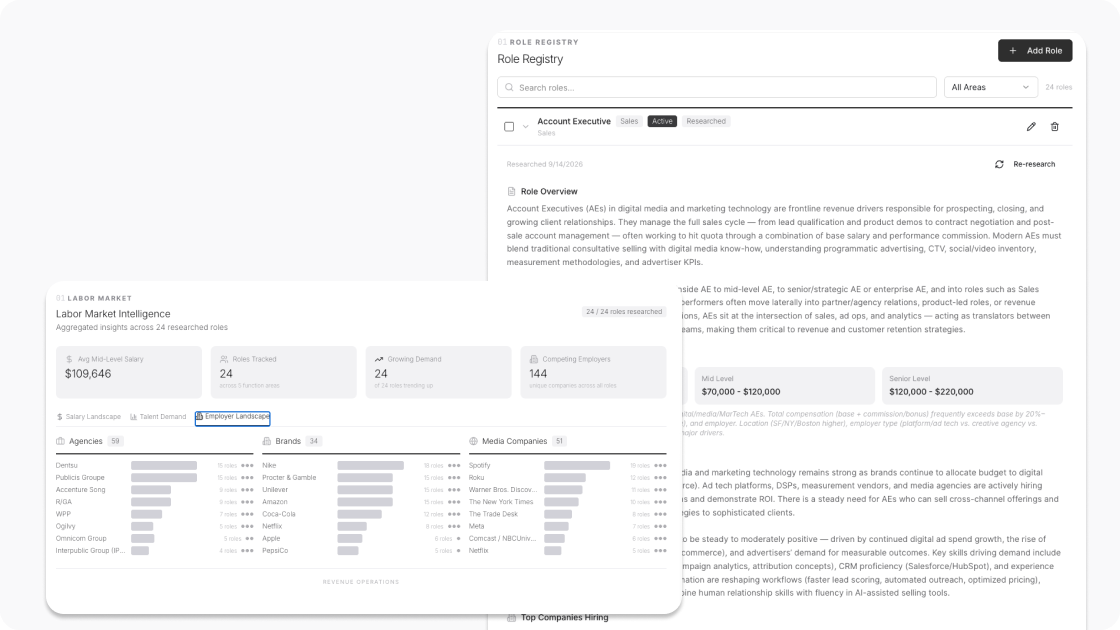
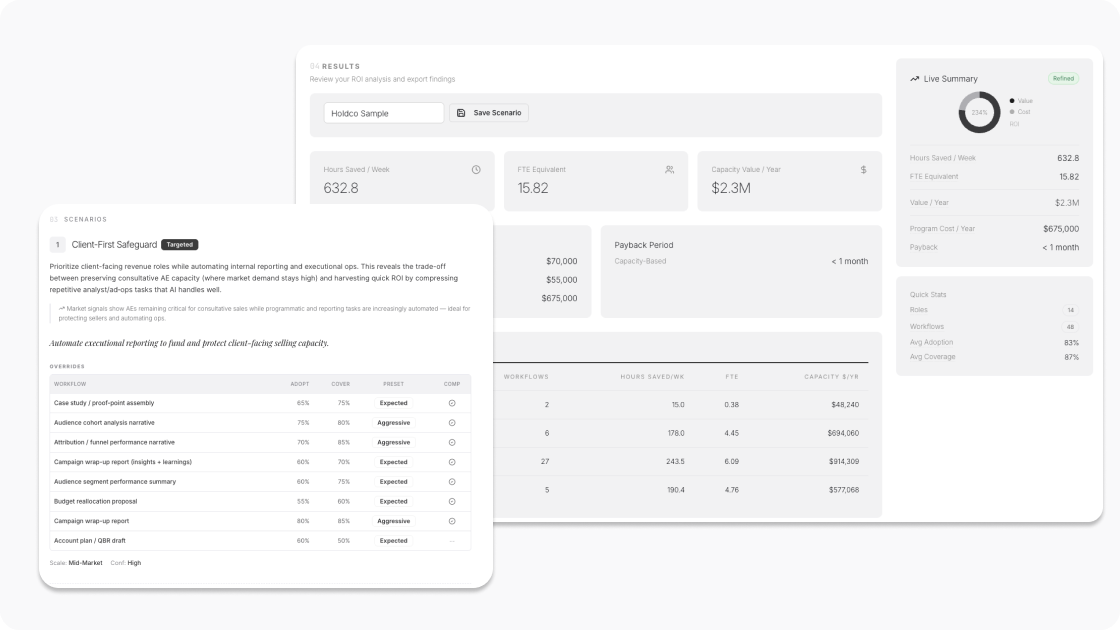
I built an ROI Model and Org Designer to make those possibilities easier to examine, connecting changes in the work to decisions about what the team could do next.
Make the assumptions visible
The ROI Model starts with the work: who contributes, how much time it takes and what that time costs.
I can then explore how the picture changes with AI. How much of the workflow could it support? How widely would people use it? How much time would they still need to check the results?
Adoption, review time and the costs of implementation, training and running the program all affect the forecast. Keeping those assumptions visible makes it possible to question an attractive result and see what it depends on.
Explore how the work could change
Making a task faster can also create an opportunity to reorganize the workflow.
The tools let me model whether a contribution stays as it is, becomes a review step or is removed. An accountable owner remains, and a required approver retains a review contribution.
That makes the organizational choices tangible. If an agent prepares work that someone previously assembled, what should that person now examine? If a handoff disappears, who takes responsibility for what it used to accomplish?
The model includes reviewer time and the owner’s additional coordination work. Those responsibilities consume capacity too.
Give the team something to grow into
Org Designer connects the time a scenario could release to priorities such as client relationships, new markets, skill development and work the team has not had room to pursue.
It also proposes roles and responsibilities based on those priorities. The recommendations provide a starting point for discussion about how the team could develop.
The distinction between capacity and savings matters here. A team might serve more clients while its payroll stays the same. The model can estimate the value of released time; a reduction in spending requires an actual change in expenditure.
The useful decision is where that capacity could create the most value, and what people would need to make use of it.
Test the plan against reality
Building the tools exposed inconsistencies between their calculations. The documented versions use different labor-cost multipliers, and some workflow calculations are duplicated. The same scenario can therefore carry different values between views.
The next design step is to give both tools a shared calculation source and validate that a plan cannot allocate more time than it releases.
The scenarios also need to be compared with observed work. Which handoffs can actually disappear? How much review remains? Where does the released time go?
That evidence is what will make the tools more useful for planning a team’s next stage.