

Question
How do you connect the decisions that drive revenue?
Work
Revenue operations design, agentic research, commercial tools and capacity modeling.
Every new client brings a revenue opportunity and a promise about what the business will deliver.
Making that promise involves connected decisions: which problem to solve, how to explain the value, what to charge and how much work the team can support.
I designed tools for Veylan that bring those decisions closer together, from market research and client strategy through pricing, proposals and capacity planning.
Carry evidence into the offer
Research agents collect and organize market and competitor developments. That work helps inform positioning, recommendations and sales conversations, with references retained so people can examine the evidence.
For a particular client, workflow models estimate how AI could change the effort involved, the review still required and the capacity that might become available. Organization-design tools explore the implications for responsibilities.
Together, those tools help develop a recommendation and make its assumptions available for discussion. The commercial conversation can build on an explanation of what would change in the client’s work.
Make the commercial choices visible
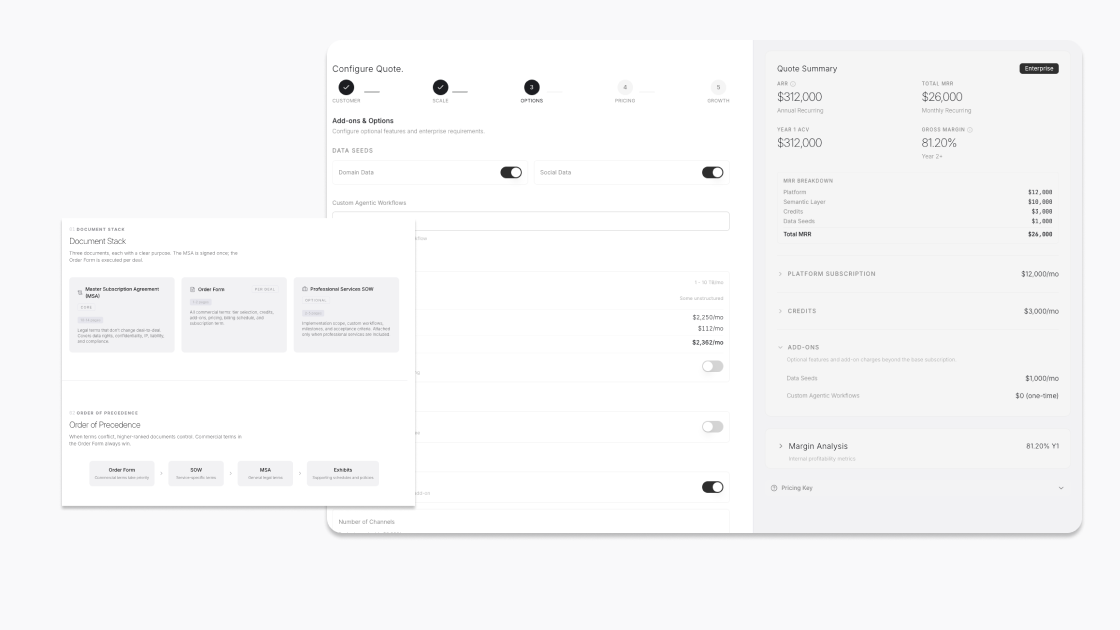
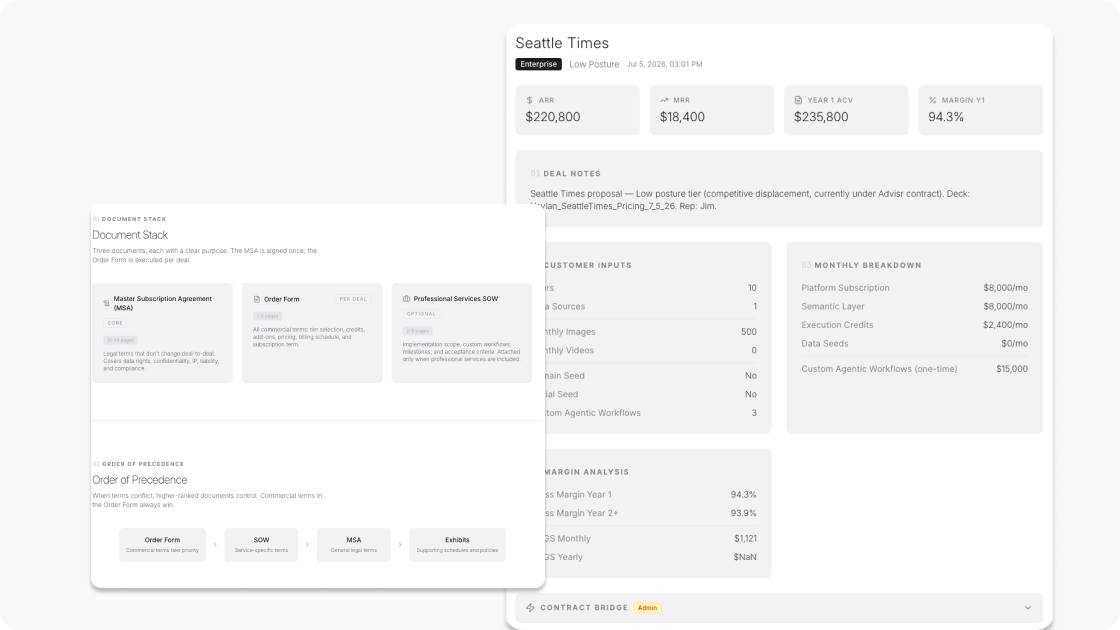
Pricing tools calculate revenue, estimated direct costs and margins. That gives the team a way to examine the economics of an offer alongside the proposed work.
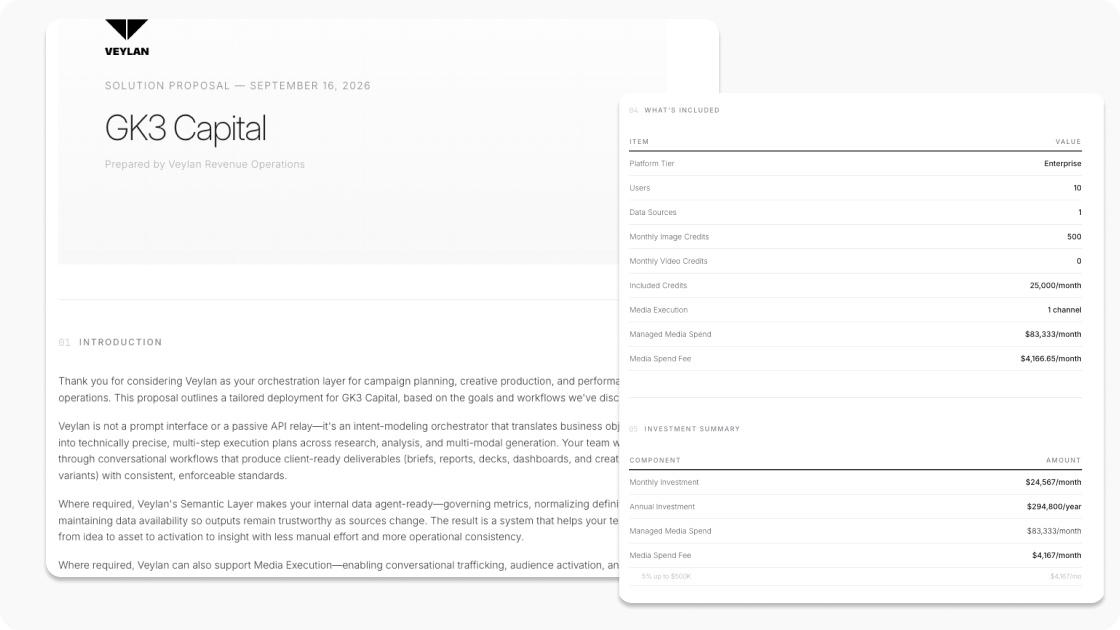
Versioned quotes, proposals and order forms carry the selected terms into client documents and billing configuration.
The design goal is to preserve the relationship between the recommendation and the commitment. The scope, price and assumptions behind an offer need to remain understandable as it moves from a sales conversation toward delivery.
Plan the work behind the revenue
The forecasting tools combine account growth, service intensity and staffing assumptions to estimate the consulting, integration and customer success resources the portfolio may require.
These teams are designed to use agents extensively. The model still needs to account for what people must contribute and how much work they can support.
That creates a practical way to explore growth. How many additional accounts could the existing team absorb? Where might delivery become constrained? When would we need more people, different skills or a change in the service?
Several handoffs between the tools remain manual. Connecting signed deals, actual usage and delivery results back to pricing and capacity forecasts is the next development direction.
The aim is for experience with each engagement to improve the assumptions behind the next one.